EMBRACE THE REMAINDER
On Belief, Practice, and Staying After the World Stops Cooperating

“I am a patient boy. I wait. I wait. I wait. I wait.”— Fugazi
The last essay I published — “Who Will Monitor the Monitors?” — was about a compulsion I know from the inside: the belief that if I can just map enough, track enough, contextualize enough, the world will hold still long enough for me to act.
I described it as a repetition compulsion. The feed keeps refreshing. The resolution never arrives.
I know what happens to me when the monitoring impulse takes over. I get anxious and miserable. I start to feel like the only responsible thing to do is keep refreshing the feed until the world finally makes sense.
I’ve tried a lot of ways out of that pit. Almost all of them just make things worse. More information doesn’t help. Better analysis doesn’t help. Even stepping away from the feed doesn’t really solve the problem, because the compulsion just finds new objects.
This essay is my attempt to explain the only way of thinking and living I’ve found that consistently pulls me out of that spiral. It’s the only approach I’ve discovered that gives me any real sense that I’m living honestly and living well.
What We Believe vs. What We Do
There’s a loose and somewhat slippery distinction that gets used in religious studies to categorize the normative structure of different spiritual traditions. Some traditions prioritize right belief, others prioritize right practice.
Belief-centered traditions tell you that it’s your job to get the picture right, establish the accurate map, hold the true account of how things are — and right action will follow. The Western theological tradition calls this orthodoxy: right belief. Most of our educational institutions, most of our media, most of our professional culture — and, if I’m being honest, most of my own instincts — operate on this assumption. Know more. Understand better. Get it right, and the rest will come.
Practice-centered traditions tell you something different. They tell you (even though it’s often implicit) that what you believe matters less than what you do, physically, over and over. In these traditions, spiritual cultivation happens through repeated action and encounter, not through having a correct description of the cosmos. You don’t think your way into a new way of living. You live your way into a new way of thinking. Though it’s a term you may have never heard before (which will somewhat prove my point and presage where I’m going), students of religion call this orthopraxy: right practice.
I’ve been theoretically aware of this distinction since the first time I picked up a Huston Smith book when I was in middle school, but the fact is that I have an American operating system. The American brain’s understanding of what counts as a religion is almost entirely dictated by Christianity’s structure. You’ve got a book. You’ve got a creed. You’ve got a holy figure. Maybe you’ve got some ritual practices, but those are usually secondary to all but the most serious believers — and notice that I say believers, not doers.
This is so central to the way that we conceptualize religion that we don’t even have a common word for the person whose religion is constituted primarily by what they practice rather than what they profess — hence the clumsiness and foreignness of orthopraxy.
As I sat with this distinction over the past few years of deeply and obsessively studying spiritual traditions from around the world, I realized the orthodoxy of orthodoxy ran much deeper than I initially realized. It had colored not just how I thought about religion but how I thought about identity, authenticity, and commitment. My default was still to treat any kind of ‘passionate attachment’ as a species of belief rather than a species of practice.
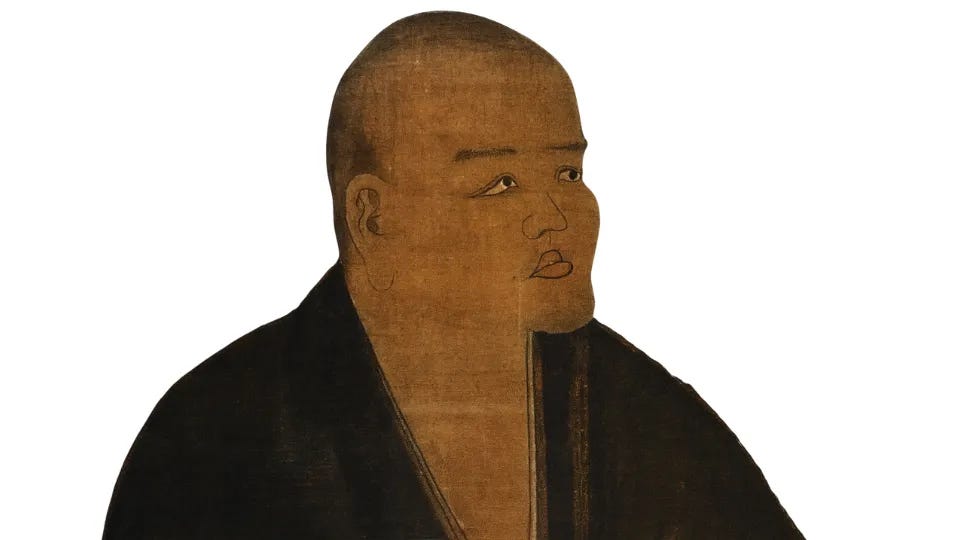
Nevertheless, it’s easy for me to show that the primacy of orthodoxy shouldn’t be so unquestioned. Imagine I hand you a copy of Dogen’s Shobogenzo (the 13th century foundational ‘text’ of Soto Zen) and say: “Read this and let me know if you believe in Zen Buddhism or not.” If you know even a tiny bit about Buddhism, you’ll recognize that this is absurd. You aren’t going to validate Soto Zen by reading Dogen. You validate Soto Zen by practicing zazen. You’d have to actually sit and meditate and you’d have to do the work of meditating, over months and years, to see if the practice discloses anything, if it transforms you, if it changes you. You can’t read your way to an answer because the answer isn’t propositional. It lives in the doing or it doesn’t live at all.
And yet we assume that knowing is principally a question of believing correctly. This is where the impulse to ‘monitor the situation’ comes from. It is what happens when we unconsciously embrace the logic of orthodoxy and universalize it across all areas of our life. The compulsion to track, map, and contextualize everything is the logical endpoint of a culture that has bet everything on getting the picture right. The feed exploits this because the feed is an orthodoxy machine — it promises the next refresh will complete the picture, and it never delivers.
What I’m advocating for is a way of being in the world, a disposition, a stance, a way of life that is neither forceful nor passive. I’m going to call it staying. Staying is the refusal to withdraw your presence when the world stops cooperating. Staying is an orthopractic stance. It is produced by showing up repeatedly to sites where reality can refuse you, and not leaving when it does.
How the Mirror Replaced the Body
We tend to think of prayer as a transaction — you asking God for something, or expressing a belief. But that’s a relatively late understanding of what prayer was designed to do.
In the contemplative traditions of Christianity, practices like Hesychasm involved repeating the Jesus Prayer thousands of times a day, synchronized with breath and heartbeat. The point was not to communicate a message to God. The point was to transform the one praying. You didn’t pray because you thought that God would grant your wishes because of the rigorous correctness of your beliefs. You prayed because you believed that putting your body in a certain posture and intoning repetitiously at a certain frequency in a certain cadence could transform you, transform what you were capable of perceiving and thereby transform your whole world. And crucially, this belief was usually transmitted not through argument but through encounter with someone who had already been transformed by the practice — someone you could see and talk to about their experience. The monks at Mount Athos still live this way. Who wouldn’t want to be those guys?
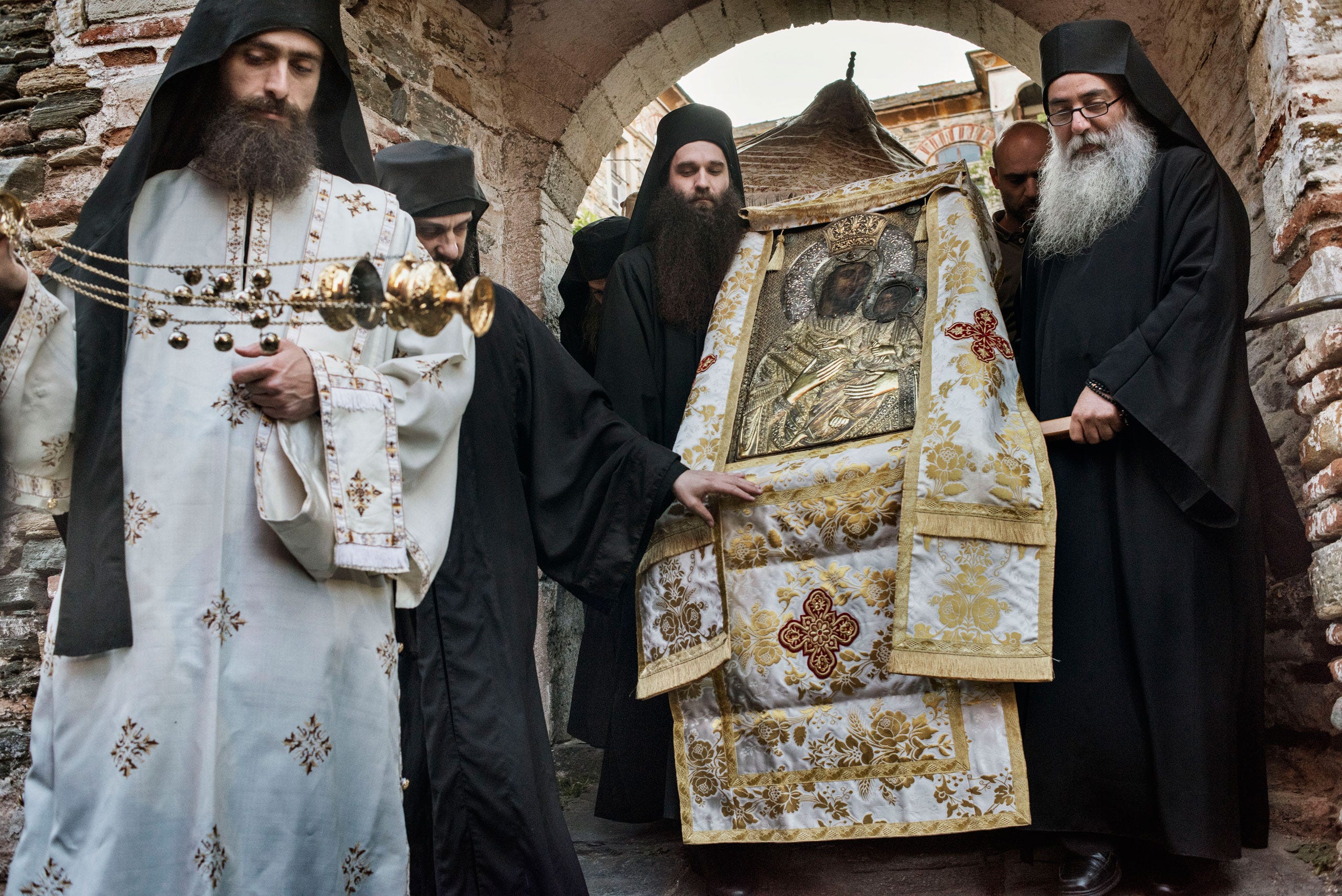
There are still vestiges of this commitment to practice and prayer in our religious traditions, but it’s largely been sequestered to monasteries and fringe groups of practitioners. Starting with the Reformation, Western Christianity largely traded this for a model in which the right beliefs, held sincerely enough, would do the work that practice was supposed to do. The body, which was already often distrusted, became incidental. The mind became everything. From there it is a short walk to the modern picture of the mind as a mirror of nature — the idea that knowledge consists in getting your internal representation to correspond with what is out there.
The person refreshing the feed at 6 a.m. is not just addicted to the scroll. They are enacting the fantasy that if they can just collect enough representations of the world, they will finally understand it — and there’s an unstated assumption that this understanding will somehow transform their relationship to the blooming, buzzing confusion of our extramental reality that refuses to sit still. They are playing reality correspondent — trying to *correspond* with the world in both senses, journalistic and philosophical. And both senses fail for the same reason: there is no view from nowhere. There is no refresh that completes the picture. Your body sits in the chair. The mirror keeps filling. Nothing corresponds.
This impulse is tragic. The person monitoring the feed is not lazy, or weak, or addicted in any simple sense. The effort is likely put forth in good faith. Unfortunately, failure is guaranteed — and not because they aren’t trying hard enough, but because the endeavor is structurally incoherent. Monitoring’s success conditions require a world that holds still and waits to be accurately represented. A fixed territory for which a sufficiently detailed map could, in principle, be drawn. That world does not exist.
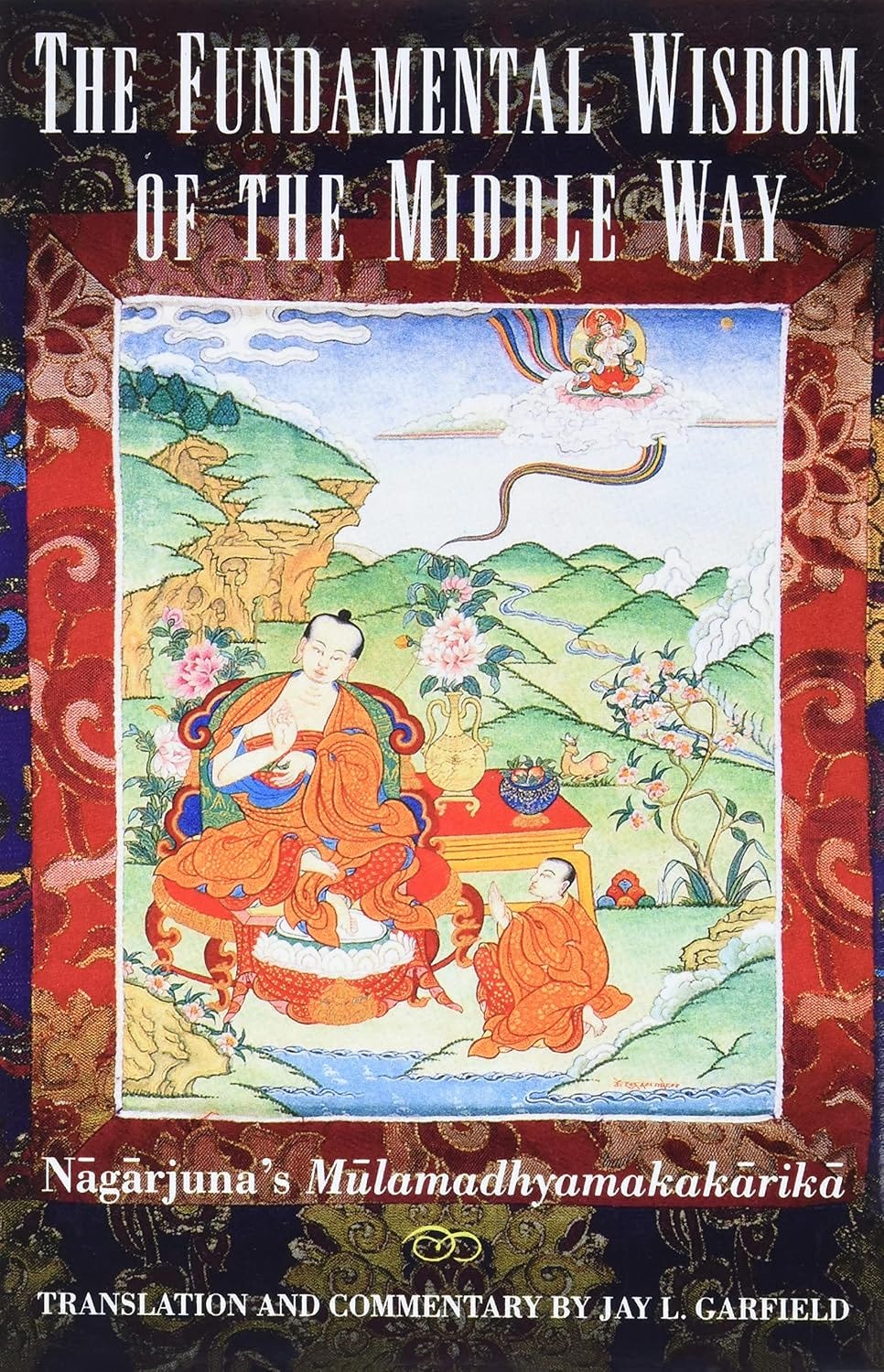
We live in a world of dependent arising — what Nagarjuna calls pratītyasamutpāda — where nothing exists in isolation, where the observer and the observed are always already entangled, where reality discloses itself differently depending on how you show up to it and vice versa. The God’s-eye view isn’t merely difficult to achieve. It’s impossible. It’s incoherent. There is no position outside the process from which to inspect it.
This is what makes the monitoring compulsion genuinely tragic rather than merely sad. When I am up at 5 a.m. with seventeen tabs open chugging an energy drink, I’m not failing at something that could, with more discipline or better tools, succeed. I am attempting to accomplish something that cannot be done by anyone, anywhere, ever — because the world is not the kind of thing that sits still for a correspondence check. The harder I try, the further I get from what I’m looking for. The map redraws itself because the territory is not a territory. It is a process that I am a part of. My mode and manner of attention is a constitutive piece of what brings that process to fruition.
I want to be clear: this is not an anti-intellectual argument. Understanding without practice is empty. Practice without understanding is blind. What I’m after is the integration — what happens when the knowing and the doing become indistinguishable because the practice has changed how you see. Formed understanding. Not the abandonment of the intellect but its integration with bodily practices that carry it through the world.
Everything I have learned of any real value has come through practices that forced me to confront people, processes, things, realities, that refused to cooperate with me until the refusal taught me something that reading alone — at least when I encountered reading as an act of ‘getting it right’ — never could.
Born to Notice
My mom pointed with her chin. She also said things like: “The trash is full.”
That was it. No instruction. No request. Just a statement of condition. I was supposed to infer that this meant *take out the trash*.
I grew up in Michigan’s Upper Peninsula, and my mom is Ojibwe — a member of the Keweenaw Bay Indian Community, as am I. But none of this was glamorized when I was young. We went to a boring Scandinavian Lutheran church and did that whole deal.
My mom wasn’t teaching me “indigenous pedagogy.” She was just raising me the way she was raised, which meant she didn’t explain things directly. She stated conditions. She pointed. And then she waited for me to infer what the situation required.
For most of my life I found this style of indirect communication bewildering — and, honestly, a little maddening. ‘What do you want from me?!’ It wasn’t until much later, when I was reading V.F. Cordova and other Native philosophers in graduate school, that I realized what had actually been happening. Cordova tells similar stories about her childhood and notes that this manner of child-rearing is born of a desire to honor the autonomy of every individual — and also an awareness that any knowledge worth having is worth earning. I’d been getting a Bruce Lee education without realizing it — don’t concentrate on the finger or you will miss all that heavenly glory.
Whether my mom knew it or not, she wasn’t transmitting content. She was forming a capacity, a habit of mind, a way of relating to the world. I was being trained to develop the capacity to perceive what a situation requires and respond accordingly without being told. You can’t get that from reading about it. You have to stand in a kitchen with a full trash can and no instructions, and figure out what the situation is asking of you, and do it, and do it again the next day, until the noticing becomes automatic.
Three Sites of Refusal
Let me give three concrete examples of how this shows up in my life — practices that have formed the stable axis of my adult years. They share a simple feature. Each can refuse you.
Strength training. There is a particular Tuesday I remember. I had been chasing a deadlift number for months — a number that had become symbolic of something larger than itself. I had read everything, watched every tutorial, memorized all the cues. I had the orthodoxy down cold.
I walked up to the bar. I braced. I pulled. It did not move. It simply stayed on the floor.
What mattered was what happened next. I came back the following week. And the week after that. Each time, the bar was teaching me something that reading about the bar could never teach. Strength had never been a possession. It was a relationship with forces that occasionally permitted negotiation.
Grappling. Anyone who has spent real time on a mat with another human being trying to solve you like a riddle learns quickly that the art exists only in the space opened by unpredictability. You cannot ‘orthodoxy’ your way through a scramble. There is no map that survives contact with someone who has not agreed to follow your map. Control is temporary. Responsiveness is everything.
Philosophy. For nearly fifteen years I taught philosophy at the university level. When philosophy happened in the classroom, it felt like something I was delivering. Then the institutional conditions collapsed and the classroom disappeared. I was left with a question I am still trying to answer: what does it mean to do philosophy when the classroom is gone?
What I’m doing now — writing these essays and entering conversations with readers — is the closest I’ve come to finding another site where philosophy can happen. I don’t know if it’s working. The practice is still refusing to cooperate. And I’m still showing up.
What Staying Produces
If staying produces something, what does that something look like?
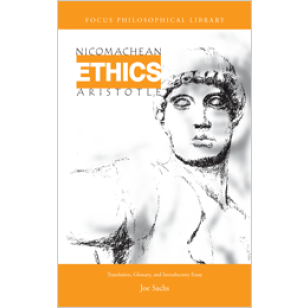
Aristotle thought practical wisdom develops the way a craft develops. You don’t acquire it by memorizing rules about action. You acquire it by repeatedly encountering situations that demand judgment. Over time those encounters form what he called a hexis — a stable disposition shaped through practice. Eventually you stop applying rules and start seeing what matters in the situation itself. That capacity to see what the moment calls for is what Aristotle called phronesis.
Here’s the best I can do in describing what that looks like in lived experience: staying does not teach you to simply pay more attention to more things. It teaches you to discern what is actually making a claim on you.
Watch a white belt grapple. He reacts to everything — every grip, every shift, every feint. His attention is omnidirectional and exhausting. Now watch a black belt. She waits. She feels what’s actually developing beneath the surface movement. She lets the feints pass. She responds to the thing that matters. Same information environment. Completely different quality of attention.
It’s the ER nurse who walks into a waiting room and immediately perceives which patient is actually dying — not because he ran a differential diagnosis in his head, but because twenty years of staying in rooms where people die has trained his attention to detect what a textbook cannot teach you to see.
It’s the teacher who feels the moment a classroom shifts from performance to genuine inquiry — and knows not to talk through it. Not because she read a pedagogy manual. Because she has sat in enough silence to recognize when the silence is working.
It’s the farmer who looks at the sky and knows something the weather app doesn’t. Not more information. Better perception. Formed by decades of exposure to conditions that refused to cooperate with forecasts.
It’s my mom, saying “the trash is full” and waiting to see if I’ve developed the capacity to hear what the situation requires without being told.
It’s the recovering alcoholic who walks into a party and instantly knows which conversations are safe and which ones aren’t — not through analysis, but through a bodily knowledge that was earned one day at a time over years of remaining in contact with the reality of their own fragility.
It’s the strategist who hears the anxiety beneath the brief — the real problem hiding behind the stated one — because a decade of being wrong about what clients actually needed has trained her to listen past the surface.
It’s the grappler who knows, three moves before it happens, that the submission is coming — not because they calculated it, but because their body has been in that position a thousand times and the pattern has become perceptual rather than cognitive.
In every case, the information was available to everyone. The perceptual experience that arrived loaded with meaning, which guides intelligent action, was available only to those who stayed.
The Remainder
What the practices have in common, at the most fundamental level, is that they keep you in contact with a world that exceeds your categories for it. Not a world that is hostile or indifferent — just one that is genuinely, irreducibly *more* than any frame you put on it. The bar is heavier than your theory of strength. The scramble is wilder than your game plan. The full trash can is asking something of you that no amount of reading about trash cans could prepare you for. Reality has a remainder, and the remainder is where the world actually lives.
There is a temptation — and it runs deep, much deeper than the feed — to resolve this. To find the one elegant explanation that wraps it all up. You see it in philosophy, in theology, in the newer strains of idealism that want to say: maybe everything is consciousness, maybe the universe is experiential all the way down, maybe if we just get the metaphysics right, the mystery resolves. It’s a seductive move. But it achieves its tidiness by trimming away the remainder. It’s like putting on blue-tinted glasses and then claiming you’ve discovered the universe is blue. You haven’t solved the mystery. You’ve renamed it and called it an explanation.
I’m not interested in solving the mystery. I’m interested in remaining adequate to it. When we stop trying to make reality fit our categories — even the sophisticated ones, even the philosophical ones — we actually get more, not less. We get a world that can genuinely surprise us. We get real strangeness, real novelty, real otherness. Not as features of some grand unified theory, but as what happens when reality refuses to be domesticated by our need for cognitive closure.
If we live in a world of dependent arising — a world where nothing exists in isolation and where how you show up changes what discloses itself — then staying is not just ethically preferable. It is epistemically demanded by the kind of world we actually inhabit, in a way that monitoring structurally cannot be. Monitoring assumes a world that holds still. Staying is a mode of attention suited to a world that doesn’t. And that means your mode of attention is not incidental to what you’re able to perceive. It means you bear some responsibility for how reality shows up for you. Which is heavy, and daunting, and — once you stop fighting it — genuinely liberating. Because it means the world is not indifferent to your practice. How you attend to it matters. The practices that define us are not just character-building exercises. They are how a finite creature participates in a world that is always arriving.
Will this mean the world perpetually feels a bit foreign and a bit strange? Yes. But the strangeness is not a problem. It’s the sign that you’re actually in contact with something real. The moment reality stops surprising you is the moment you’ve replaced it with your representation of it. That’s exactly what the feed promises — and we have already seen what that promise is worth.
The Feed and the Commons
Modern life makes withdrawal easy. And it offers an especially seductive version of involvement that feels like the opposite of withdrawal but functions identically: the feed.
Monitoring feels like staying. It looks like engagement. But nothing in the feed can refuse you. You can track a war without the war making any claim on your life. You can follow a crisis without remaining in a room with someone who disagrees with you about it. The remainder has been trimmed away. Nothing can surprise you. The blue-tinted glasses are built into the interface.
The feed is antagonistic to right practice. It closes off the possibility of phronesis. A commons — any real one, from the gym at 6 a.m. to the mat to the conversation that actually changes your mind — emerges only where people remain jointly exposed to something neither fully controls. What collapses when people withdraw from those sites is not just meaning, it is the shared structure of disclosing the world with others that allows meaning to appear at all.
Staying preserves the structure where meaning can appear. Not by restoring guarantees, but by maintaining exposure.
-
Against Confusion was never meant to be a collection of arguments. Arguments alone cannot repair what has been lost. The essays are intended to be demonstrations, not transmissions — me doing the practice of noticing, dwelling, and staying publicly so you can see what the practice looks like. My mom is still pointing with her chin. I’m still inferring. These essays are my version of the gesture — pointing toward what I think is worth noticing, and then waiting. Treat every piece of writing from me as me saying: “This is how it seems to me. What do you think?” You can only answer that question by thinking things through yourself. You have to do it too.
You remain present. You remain answerable. You remain available to what has not yet become clear and what might never become clear.
This is not a resolution. It is a way of continuing. And under present conditions, continuing without illusion is no small thing.